Published by:
CGP EDU Academic Team
Published on: September 12, 2026
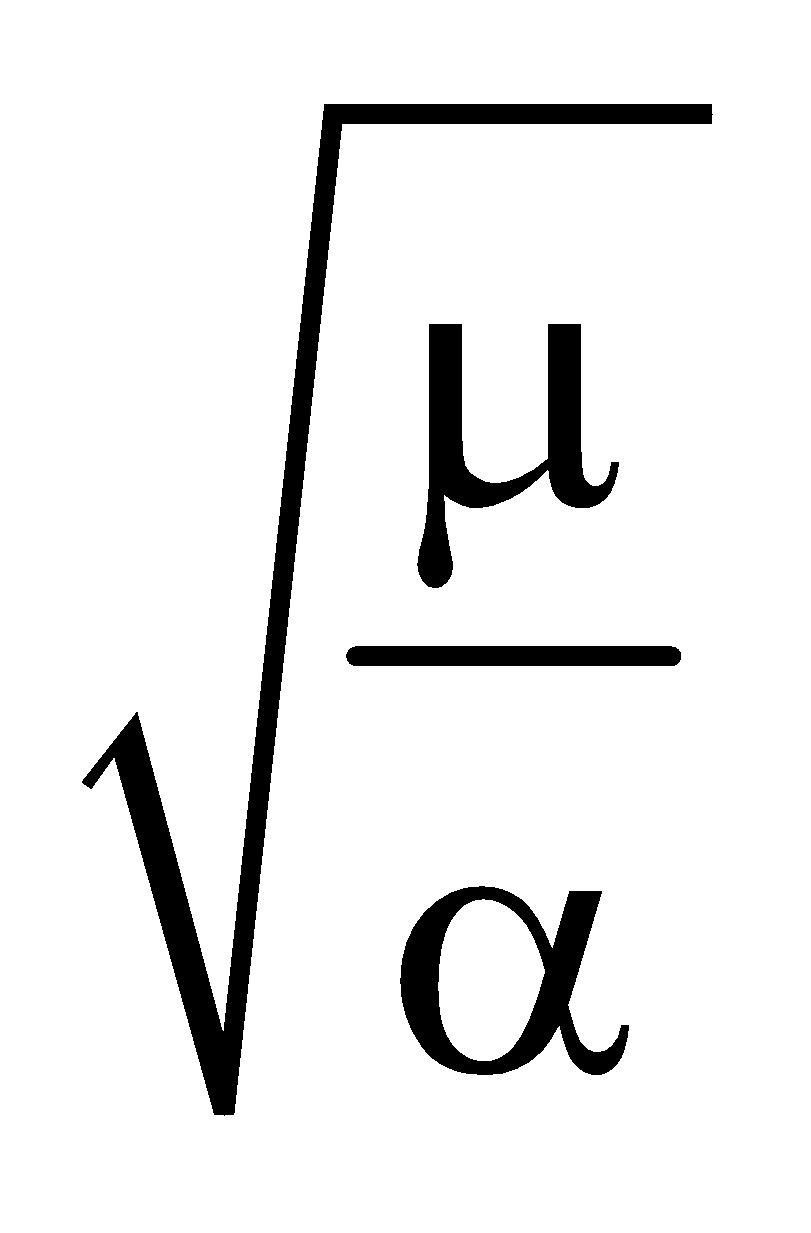
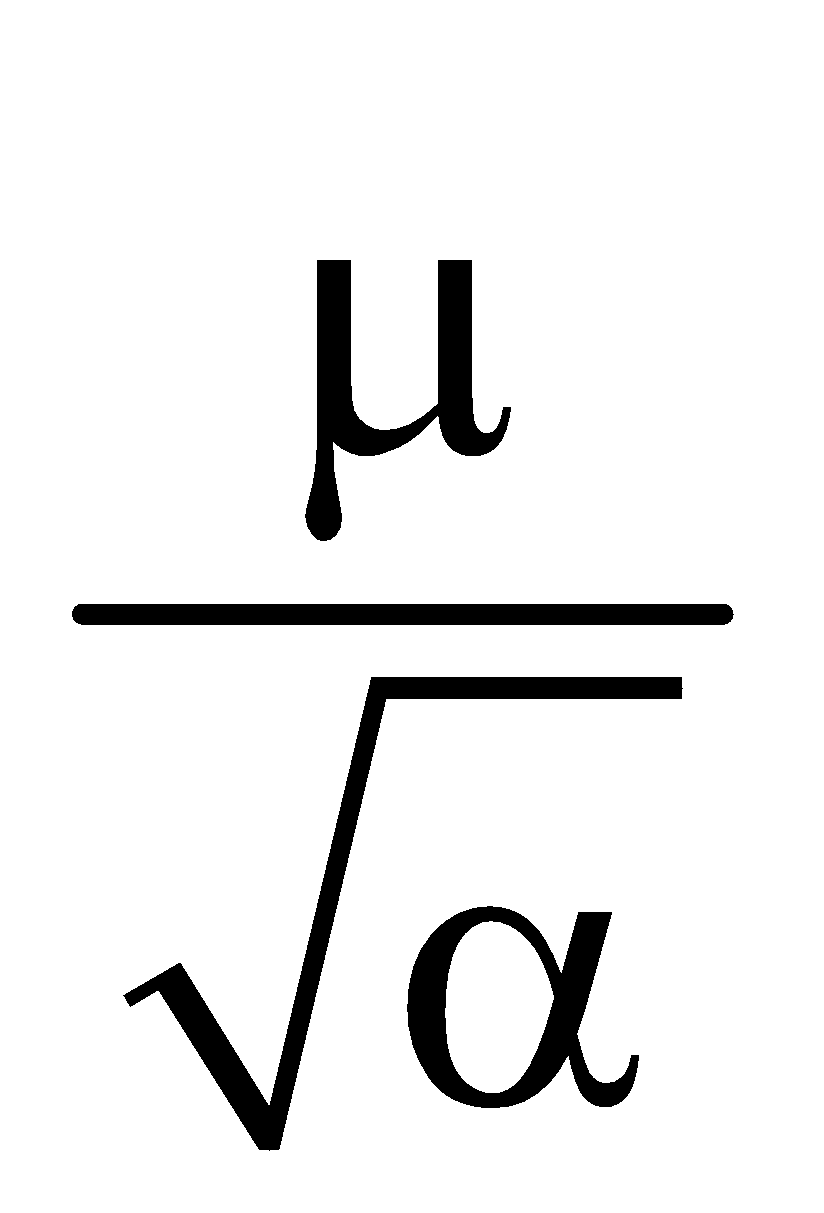
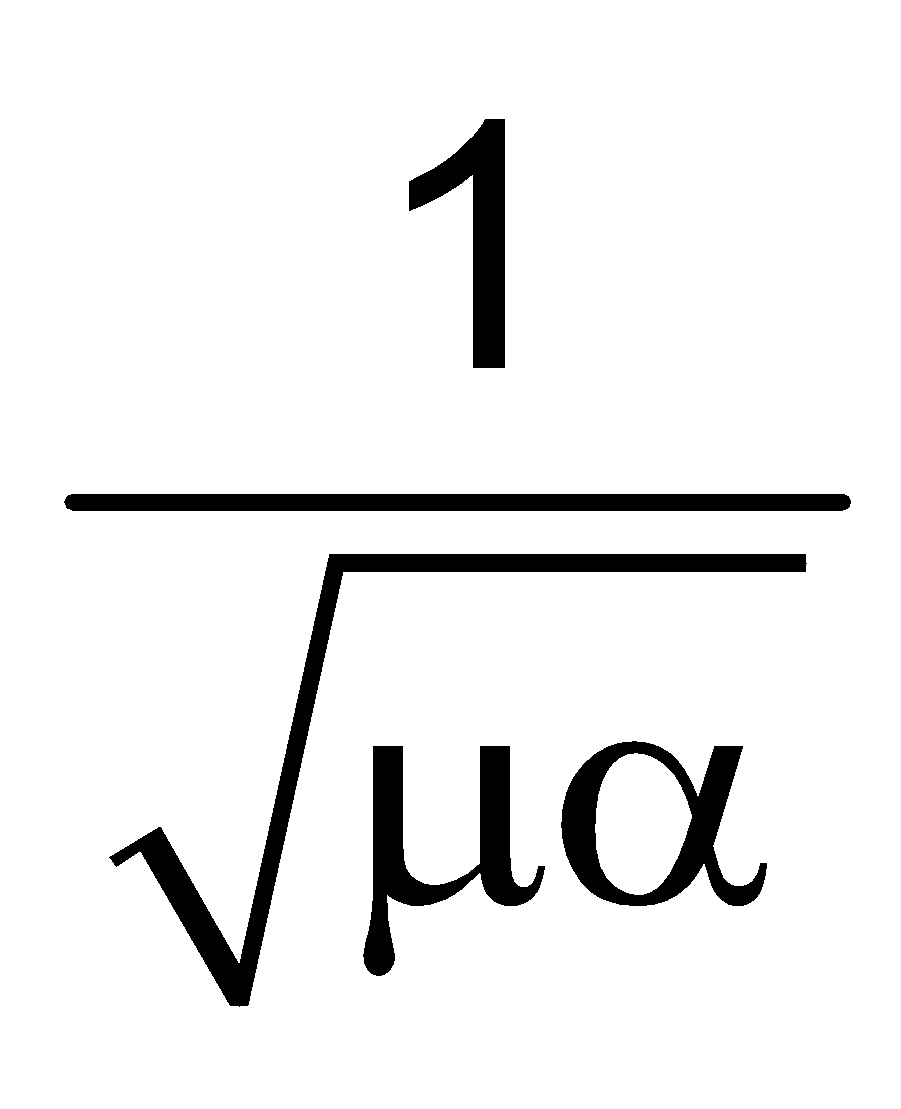
A long horizontal rod has a bead which can slide along its length and is initially placed at a distance L from one end A of the rod. The rod is set in angular motion about A with a constant angular acceleration, α. If the coefficient of friction between the rod and the bead is µ, and gravity is neglected, then the time after which the bead starts slipping is-
Text Solution
Verified by ExpertsThe correct answer is:
C
To find the time after which the bead starts slipping, we first need to analyze the forces acting on the bead.
Step 1: Calculate the tangential acceleration
The rod is rotating with an angular acceleration \(\alpha\). The tangential acceleration \(a_t\) of the bead at a distance \(L\) from point A is given by:
\[ a_t = \alpha L \]
Step 2: Calculate the frictional force.
The maximum static frictional force (before slipping) can be expressed as:
\[ F_f = \mu m g \]
Since we are neglecting gravity, the frictional force will be assumed as the force required to hold the bead against the tangential acceleration.
Step 3: Set up the relation for slipping.
For the bead to start slipping, the tangential force must equal the maximum frictional force:
\[ m a_t = \mu m g \]
Since gravity is neglected, it implies that we need to check when the sliding begins based solely on the tangential acceleration.
Now, from equations: \( \alpha L = \mu \), we find time \(t\) in terms of angular acceleration and distance. Since the angular distance is related to angular acceleration as \(\theta = \frac{1}{2} \alpha t^2\).
Thus, upon solving, we find:
\[ t = \sqrt{\frac{L}{\alpha \mu}} \]
Therefore, the answer matches to option C.
Step 1: Calculate the tangential acceleration
The rod is rotating with an angular acceleration \(\alpha\). The tangential acceleration \(a_t\) of the bead at a distance \(L\) from point A is given by:
\[ a_t = \alpha L \]
Step 2: Calculate the frictional force.
The maximum static frictional force (before slipping) can be expressed as:
\[ F_f = \mu m g \]
Since we are neglecting gravity, the frictional force will be assumed as the force required to hold the bead against the tangential acceleration.
Step 3: Set up the relation for slipping.
For the bead to start slipping, the tangential force must equal the maximum frictional force:
\[ m a_t = \mu m g \]
Since gravity is neglected, it implies that we need to check when the sliding begins based solely on the tangential acceleration.
Now, from equations: \( \alpha L = \mu \), we find time \(t\) in terms of angular acceleration and distance. Since the angular distance is related to angular acceleration as \(\theta = \frac{1}{2} \alpha t^2\).
Thus, upon solving, we find:
\[ t = \sqrt{\frac{L}{\alpha \mu}} \]
Therefore, the answer matches to option C.
Prepare Smarter with CGP Edu
Get practice questions, solutions, and test series in one place.
Write a Review
Share your experience with this question and solution.
Commentary
Send your comment, doubt, correction, or feedback to admin.
Similar Questions
Explore conceptually related problems
A small sphere of mass 200 gm is attached to an inextensible string of length 130 cm whose upper en…
A motorcyclist wants to drive on the vertical surface of wooden ‘ well ’ of radius 5 m, in horizont…
A mass is kept on a horizontal frictionless surface. It is attached to a string and rotates about a…
A ceiling fan has a diameter (of the circle through the outer edges of the three blades) of 120 cm …
A block of mass m = 1kg moves on a horizontal circle against the wall of a cylindrical room of radi…
A car goes on a horizontal circular road of radius R = meter, the speed increasing at a constant r…